
Sleep Apnea Testing
Comprehensive Sleep Apnea Testing in Montreal and West Island
Sleep apnea testing is the only reliable way to confirm whether breathing interruptions are occurring during sleep. If symptoms such as loud snoring, excessive daytime fatigue, or observed breathing pauses are present, objective sleep testing is strongly recommended.
Accurate diagnosis allows for appropriate treatment and significantly reduces long-term health risks.
Why Sleep Apnea Testing Is Important
Sleep apnea cannot be diagnosed based on symptoms alone. While warning signs may suggest a problem, only proper sleep evaluation can determine:
- Whether sleep apnea is present
- The type of sleep apnea
- The severity of the condition
- The appropriate treatment plan
Untreated breathing disorders during sleep can increase the risk of cardiovascular disease, high blood pressure, diabetes, and chronic fatigue.
Types of Sleep Apnea Testing
In-Clinic Sleep Study (Polysomnography)
An in-clinic sleep study is the most comprehensive diagnostic method. It measures:
- Brain activity
- Oxygen levels
- Breathing patterns
- Heart rate
- Sleep stages
- Limb movements
This evaluation provides detailed information and is recommended in moderate to complex cases.
Home Sleep Testing
For selected patients, home sleep testing may be appropriate. This simplified diagnostic method monitors breathing patterns and oxygen levels while sleeping in your own environment.
Home testing is:
- Convenient
- Comfortable
- Efficient
- Clinically reliable when prescribed appropriately
A sleep specialist determines which testing method is best based on medical history and symptoms.
What to Expect During Testing
Sleep testing is painless and non-invasive.
During the evaluation:
- Sensors monitor breathing and oxygen levels
- Sleep data is recorded overnight
- Results are analyzed by trained professionals
- A consultation follows to discuss findings and treatment options
Results typically allow clinicians to classify sleep apnea as mild, moderate, or severe.
Who Should Consider Testing?
Testing is recommended if you experience:
- Loud, chronic snoring
- Observed breathing pauses
- Excessive daytime sleepiness
- Morning headaches
- High blood pressure without clear cause
- Persistent fatigue
If symptoms interfere with daily functioning, professional evaluation should not be delayed.
Polysomnography (Sleep Study)
How is Polysomnography Used to Diagnose Sleep Disorders?
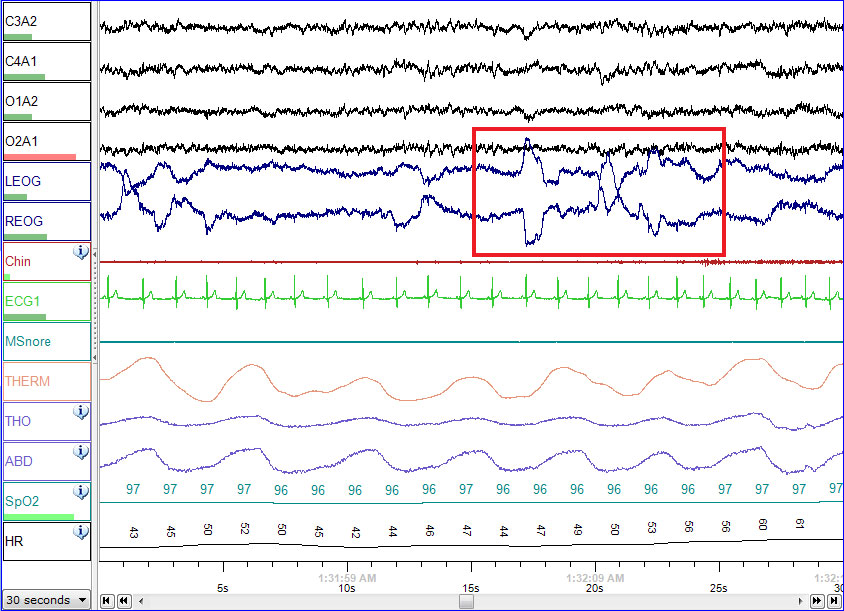 Polysomnography (also known as a polysomnogram or sleep study), is a complex test used to diagnose several sleep disorders, such as insomnia, narcolepsy, hypersomnia, parasomnias. Most notably, it is the gold standard in the diagnosis of Obstructive Sleep Apnea (OSA).
How does polysomnography work?
A polysomnographic test monitors elements of your physiology on up to sixteen channels: breathing, blood oxygenation, brain waves, alternation of sleep cycles, electrical activity produced by muscles, eye movement and heart rate.
A complete polysomnography takes an entire night in our sleep lab, during which Clinique Sommeil et Santé’s registered polysomnography technologists will conduct the most appropriate set of tests to fit your condition, which include Electroencephalography (EEG), Electro-Oculography (EOG), Electromyography (EMG), Electrocardiography (ECG) and more.
The data will then be analyzed by our specialists in sleep disorders, pneumology and electrophysiology to establish a diagnosis.
For example, in the case of Sleep Apnea, the frequency, duration, and nature of pauses in breathing will be measured and rated on the Apnea-Hypopnea Index (AHI).
Results of less than five are normal, anything above that can then be categorized as either mild, moderate or severe sleep apnea.
What do you need to do?
Polysomnography is painless, and our team will set you up in our diagnosis lab for the night.
The process includes the time necessary to set up the electrodes and probes that will be used in gathering data, followed by a full night’s sleep.
Depending on the symptoms exhibited, the exact format of the tests may differ, however, preparation is always the same. Unless directed otherwise by your physician or Clinique Sommeil Santé’s specialists, you must not consume alcohol, caffeine or any form of sleeping aid on the day of the test. Any substance that affects your sleep may lead to skewed results.
In some cases, such as diagnosis of Obstructive Sleep Apnea or titration of CPAP pressure in its treatment, a simpler assessment may be conducted over a few days in the comfort of your own home.
As a complete and elaborate sleep test, polysomnography remains the most effective way of diagnosing sleep disorders and Obstructive Sleep Apnea. It is an ideal first step towards sleeping soundly again and making the most out of your time awake.
Local Sleep Apnea Testing in Montreal
Our clinic provides professional sleep apnea testing for patients in:
- Montreal
- LaSalle
- Lachine
- Verdun
- Ville-Émard
- Pointe-Saint-Charles
- Côte-Saint-Luc
- Roxboro
- DDO
- Dorval
We offer both in-clinic diagnostic studies and home testing when appropriate, ensuring accurate and timely results.
Next Steps After Diagnosis
Once sleep apnea is confirmed, a personalized treatment plan is recommended. This may include CPAP therapy, oral appliances, lifestyle modifications, or additional medical evaluation.
Learn more about treatment options:
Sleep Apnea Treatment
Schedule Your Sleep Apnea Test
If you suspect sleep apnea or have been referred for testing, our clinic provides professional evaluation and long-term follow-up care.
Frequently Asked Questions About Sleep Apnea Testing
Sleep apnea testing monitors breathing patterns, oxygen levels, heart rate, and sleep stages during the night. Testing may be performed in a clinic or at home, depending on medical evaluation.
No. Sleep testing is non-invasive and painless. Sensors are placed on the body to record sleep data while you rest.
A standard sleep study typically lasts one full night. Home sleep testing also records data overnight in your own environment.
In most cases, a medical prescription is required before diagnostic testing can be performed. A consultation with a healthcare provider helps determine the appropriate evaluation.
Results are reviewed by qualified professionals and discussed during a follow-up consultation to determine the appropriate treatment plan.
If testing confirms sleep apnea, treatment options such as CPAP therapy or oral appliances may be recommended based on severity.